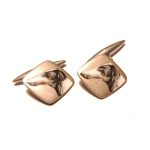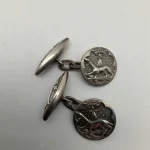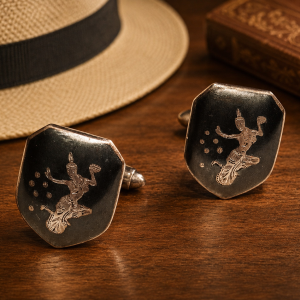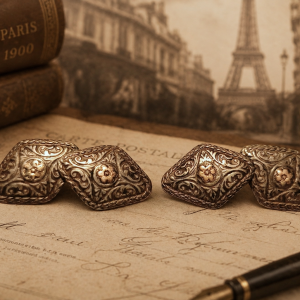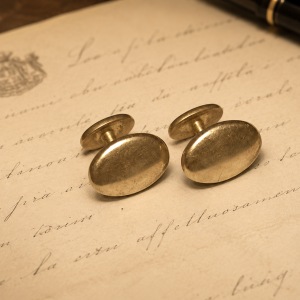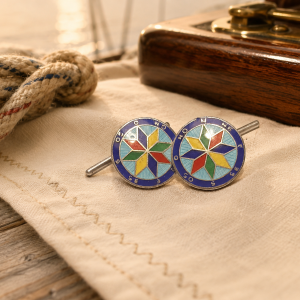
A curator’s guide to the quiet silver mark found on many Danish, Norwegian, Swedish and Nordic vintage pieces.
Some marks are obvious. Others need a loupe, patience, and the habit of turning the object over.
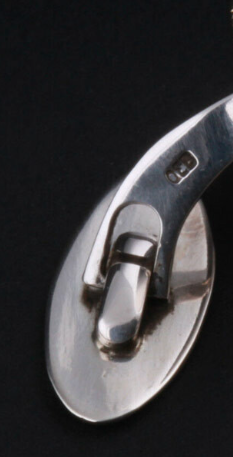
On the back of a vintage cufflink, hidden near the hinge or pressed into the reverse of the face, there may be a small number: 830. Sometimes it appears as 830S. On some Finnish pieces, you may also encounter 830H.
To the casual eye, it is just a technical mark.
To a collector, it opens a door.
It tells us that the object is not silver tone. It tells us that it is not simply plated. It also tells us that it is not sterling silver in the usual 925 sense.
It is 830 silver: a real silver alloy containing 83% silver, strongly associated with Scandinavian and Nordic silverwork.
For vintage cufflinks, that can be a very interesting thing.
Quick answer: what does 830 mean on cufflinks?
A mark of 830 on cufflinks usually indicates a real silver alloy containing 83% silver and 17% other metals. It is not sterling silver, which normally means 925 silver, but it is genuine silver and is often associated with Scandinavian and Nordic vintage silverwork.
What is 830 silver?
830 silver is an alloy containing 83% silver and 17% other metals, usually added to make the silver harder and more practical for use. In the millesimal system, where 1000 would represent pure silver, 830 means 830 parts silver out of 1000.
So, if sterling silver is 925, 830 silver sits below it in silver content.
But this is where many buyers make a mistake.
They see a number lower than 925 and assume the object is inferior. That is too crude. With vintage jewellery and cufflinks, the question is never only:
How much silver?
It is also:
- Who made it?
- Where was it made?
- When was it made?
- How good is the design?
- How well has it survived?
- Does it still have character?
A plain modern 925 cufflink may be less interesting than a beautifully designed Danish, Norwegian or Swedish 830 silver pair from the mid-twentieth century.
Silver content matters.
It does not decide everything.
830 is not sterling — but it is real silver
This distinction is important.
830 silver is real silver. It is not silver tone, not simply a colour, and not base metal pretending to be silver.
But it is not sterling silver, because sterling silver normally means 925 silver, or 92.5% silver.
A correct description should therefore say:
830 silver cufflinks
Not:
sterling silver cufflinks
And not:
silver tone cufflinks
Precision matters. A collector does not need every object to be the most expensive version of itself. A collector needs to know what the object actually is.
The truth is part of the value.
From the TCC archive
In the TCC archive, 830 silver cufflinks have appeared less often than 925 sterling, 800 silver or unmarked silver-tone pieces.
When they do appear, they tend to have a particular discipline: sober forms, modest scale, clean surfaces, sometimes a natural stone or a restrained enamel detail.
They are rarely theatrical.
They are made for a cuff, not for a display case.
These are the kind of cufflinks that work especially well today in formal professional settings. They do not ask for attention. They sit well with a white shirt, a navy suit, a grey jacket or a restrained office wardrobe.
That is where many 830 silver cufflinks make sense: not as loud luxury, but as quiet correctness.
Not everything elegant needs to announce itself.
Why 830 silver appears so often in Nordic pieces
Silver standards are not just chemistry. They are also local habits, legal systems and design traditions.
In Britain and the United States, 925 sterling became the dominant language of silver quality. In parts of continental Europe, standards such as 800, 830 and 835 were common. In Scandinavia and the wider Nordic region, 830 became especially familiar.
Norway is one of the clearest examples. Norwegian silver fineness was standardised at .830 in 1892, and the 830S mark became compulsory. From around 1920, .925 began to replace .830 more widely, although the older 830 standard remained significant.
Denmark has its own rich marking tradition. The famous Three Towers mark, originally associated with Copenhagen, became the national mark in the Danish hallmarking system in 1893. The traditional Danish system guaranteed a minimum silver purity of 826/1000 unless a higher standard was indicated; later references note that the Danish minimum standard was amended to .830 in 1936, with .925 also used, especially for export.
Swedish silver is also strongly associated with systematic hallmarking, often including maker, town, national and date marks. Both 830 and 925 are commonly encountered in Swedish silver.
Finland is more accurately described as Nordic rather than Scandinavian, but it belongs in the collector’s conversation. Finnish silver fineness marks included 830H from 1969 to 1972 and 830 from 1973 onward, alongside other standards used in different periods.
So when collectors say “Scandinavian 830 silver,” they are using a convenient phrase. Denmark, Norway, Sweden and Finland did not all use one identical system.
But they did share a design world in which 830 silver became part of the language.
830 vs 925: should you prefer sterling?
Not automatically.
Here is the basic comparison:
| Standard | Silver content | Common description | Collector note |
|---|---|---|---|
| 925 | 92.5% | Sterling silver | Internationally recognised, highly desirable |
| 830 | 83% | Scandinavian / Nordic silver standard | Common in vintage Nordic silver |
| 800 | 80% | Continental European silver | Often found in older European pieces |
| 835 | 83.5% | European silver standard | Common in Dutch, German and other European pieces |
Sterling silver has higher silver content. That is true.
But 830 silver can be slightly more practical for small objects that need strength, because the larger alloy component can make it harder and more durable in use. For cufflinks, which have moving parts and are handled repeatedly, that practicality matters.
The real difference is not:
good versus bad
It is closer to:
different silver traditions, different design languages, different collecting contexts.
A 925 cufflink may feel formal and classic.
An 830 Scandinavian cufflink may feel quieter, more design-led, more architectural.
Both can be excellent.
They simply speak with different accents.
How to identify 830 silver cufflinks
The first rule is always the same:
Turn them over.
The front of a cufflink shows style.
The back often shows truth.
Look carefully at:
- the reverse of the cufflink face;
- the toggle bar;
- the stem;
- the bridge;
- the side edge;
- the area near the hinge.
You may see:
- 830
- 830S
- 830 S
- S 830
- 830H
- a maker’s mark;
- a national mark;
- a date mark;
- a town mark;
- an assay or control mark.
The exact system depends on country and period. Danish, Norwegian, Swedish and Finnish pieces do not all follow the same pattern.
A single number can tell you silver content.
A full set of marks can tell you origin, maker, period and sometimes much more.
This is why cufflinks should be read carefully, not guessed quickly.
What does 830S mean?
On Scandinavian and Nordic pieces, you may often see 830S.
In many contexts, it indicates silver of 830 fineness. On Norwegian silver, the 830S mark became compulsory after the 1892 standardisation.
However, marks should always be interpreted in context. The same letters, numbers or symbols can mean different things depending on country, era and object type.
A mark beside a Danish tower symbol may not carry the same context as a mark beside Swedish crowns or Finnish hallmarks.
The collector’s rule is simple:
Do not read one mark in isolation. Read the whole back of the object.
Can 830 silver help date a pair of cufflinks?
Sometimes, but never alone.
An 830 mark can suggest a regional silver tradition, especially in Nordic pieces, but it is the combination of marks that matters: maker, town, assay mark, date letter, national symbol and construction style.
A pair marked 830S may point the collector toward Norway. A mark such as 830H may suggest a Finnish context in a specific period. But the number itself is only the beginning of the investigation.
For cufflinks, the mechanism also matters. Chain links, fixed bars, early lever systems and later toggle backs can all help place a pair more accurately within its period.
Good dating comes from reading several clues together.
Danish 830 silver: towers, restraint and design discipline
Danish silver has a special place in twentieth-century design.
Even when the object is small — a brooch, a tie clip, a pair of cufflinks — Danish silver often has a particular intelligence of form. Nothing feels accidental. The shape is usually calm, but not dull. The decoration is restrained, but not empty.
On Danish silver, the Three Towers mark is one of the best-known symbols. It began as the Copenhagen city mark and later became the national Danish mark. The traditional Danish system can include maker’s mark, standard mark, assay mark and assayer’s mark, depending on period.
For cufflinks, this means the back can sometimes be a small archive.
A front in silver and enamel.
A reverse carrying marks.
A mechanism that still works decades later.
That is exactly the kind of object The Cufflinks Collector is drawn to: small, wearable, but with enough evidence to reward attention.
Norwegian 830S: practical, honest, often overlooked
Norwegian silver is especially important when discussing 830.
The Norwegian standard of .830 was formalised in the late nineteenth century, and 830S became a defining mark. Later, 925 became more prominent, but 830 remained part of the Norwegian silver landscape.
Norwegian cufflinks and small silver accessories can be wonderful collecting objects because they often sit between utility and design.
They are not always ornate.
They are not always obviously luxurious.
But they frequently have excellent surfaces, clean construction and a kind of quiet confidence.
A pair of Norwegian 830S cufflinks may not announce wealth.
They announce taste.
That is a different thing.
Swedish 830 silver: marks as a language
Swedish silver can be particularly satisfying for collectors because the hallmarking system often gives more information than expected.
A Swedish silver object may show a combination of maker, town, national mark, standard and date mark. The national three crowns are especially associated with Swedish silver, and Swedish hallmark guides frequently show examples combining several marks on one object.
For cufflinks, this is fascinating.
A tiny object may carry a coded identity. You are not just looking at metal. You are looking at a small administrative and craft record.
When a cufflink has a clean Swedish design and a readable set of marks, it offers two pleasures at once:
- visual pleasure;
- research pleasure.
That second pleasure matters to collectors. The object becomes more interesting because it can be investigated.
Finnish 830 silver: Nordic, modernist, precise
Finland is not usually called Scandinavian in the strict geographical sense, but Finnish silver belongs in the broader Nordic design conversation.
Finnish silver marks included several standards over time, including 830H from 1969 to 1972 and 830 from 1973 onward. Finnish silver is also strongly associated with modernist jewellery and sculptural forms, especially in the post-war period.
In cufflinks, Finnish design can feel slightly different from Danish or Swedish work. Sometimes it is more abstract, more textural, more sculptural.
A Finnish modernist cufflink may feel less like decoration and more like a small metal object designed with intention.
That is why Nordic silver rewards looking slowly.
Why 830 silver works well for cufflinks
Cufflinks are unusual objects.
They are jewellery, but they are also tools.
They are visible, but only in flashes.
They need elegance, but also engineering.
A cufflink must pass through fabric, hold a cuff closed, move with the wrist and survive repeated handling.
This is why 830 silver makes sense.
It offers real silver character — the softness of tone, the ability to patinate, the noble feel — while remaining practical for use. Its slightly lower silver content does not make it unworthy. It gives it a working quality.
And Scandinavian design is often at its best when beauty and function are not enemies.
A good 830 silver cufflink is not precious in the fragile sense.
It is precious in the useful sense.
The patina of 830 silver
830 silver ages beautifully when treated well.
It can develop a deeper, slightly warmer tone than bright modern sterling. It may darken in recessed areas, giving engraved lines or textured surfaces more depth. On cufflinks with geometric relief, stones or enamel, this can be especially attractive.
Patina should not be confused with neglect.
A vintage cufflink should be clean.
But it does not need to look newly manufactured.
Too much polishing can make an 830 silver cufflink less interesting. It can flatten the surface, soften marks and remove the contrast that gives old silver its life.
The aim is not to erase time.
The aim is to let the object speak clearly.
How 830 silver differs from silver tone
This is one of the most useful distinctions for buyers.
830 silver is real silver alloy.
Silver tone is a silver-coloured appearance.
A silver tone cufflink may be made from brass, steel, nickel alloy or another base metal with a silver-coloured finish. It may be attractive, collectible and wearable, but it does not have the silver content of an 830 piece.
| Feature | 830 silver | Silver tone |
|---|---|---|
| Mark | Often 830, 830S, 830H or hallmarks | Often unmarked or marked base metal / plated |
| Metal content | 83% silver | Usually no meaningful silver content |
| Wear | Same silver colour below surface | May reveal brass, copper or grey base metal |
| Tarnish | Natural silver tarnish | May pit, flake, rust or discolour differently |
| Value | Metal + design + maker | Mostly design, rarity, brand, condition |
The important point is not to despise silver tone. Some silver tone cufflinks are wonderful.
But they should not be confused with 830 silver.
Honesty is what makes collecting civilized.
What makes an 830 silver cufflink collectible?
Silver content is only the beginning.
When selecting 830 silver cufflinks, look for:
1. Design strength
Is the shape memorable? Does it have balance? Does it still look wearable today?
2. Maker or origin
A readable maker’s mark, country mark or date mark can make the piece more interesting.
3. Condition
Check the mechanism, hinge, soldering, enamel, stone setting, edges and surface.
4. Wearability
Some vintage cufflinks are beautiful but awkward. A good pair should still work well on a cuff.
5. Surface
Brushed, hammered, engraved or polished silver surfaces all create different moods.
6. Patina
Natural age can be attractive, especially when it adds contrast without obscuring the design.
7. Story
Scandinavian silver often carries a design story: minimalism, modernism, craft, utility, landscape, restraint.
A collector should ask:
Is this pair interesting because it is silver, or because it is itself?
The best pieces are both.
Common mistakes when buying 830 silver cufflinks
Mistake 1: Calling them sterling
830 silver is not sterling. It is real silver, but not 925.
Mistake 2: Assuming 830 is low quality
It is lower in silver content than sterling, but many 830 pieces are beautifully designed and highly collectible.
Mistake 3: Ignoring country marks
830 alone tells you metal content. The other marks may tell you the real story.
Mistake 4: Over-polishing
A heavy hand can erase the charm of old silver.
Mistake 5: Confusing Scandinavian and Nordic
Denmark, Norway and Sweden are Scandinavian. Finland is Nordic. In silver collecting, they often appear in the same design conversation, but the distinction is worth respecting.
Mistake 6: Buying only by purity
A boring 925 pair is still boring. A brilliant 830 pair is still brilliant.
How to describe 830 silver cufflinks correctly
If you are selling or cataloguing a pair, the description should be precise.
Good descriptions:
- “Danish 830 silver cufflinks”
- “Norwegian 830S silver cufflinks”
- “Swedish 830 silver cufflinks with maker’s marks”
- “Finnish 830H silver cufflinks”
- “Marked 830 silver, Scandinavian origin”
- “830 silver, not sterling”
Avoid:
- “sterling silver” unless marked or tested as 925;
- “solid silver” without explaining the fineness;
- “Scandinavian sterling” if the mark is 830;
- “silver tone” if it is actually marked 830.
A serious description does not make the object smaller.
It makes it more credible.
Caring for 830 silver cufflinks
Treat 830 silver much as you would treat other vintage silver.
- Wipe gently after wearing.
- Store dry.
- Keep away from harsh chemicals.
- Avoid rubber bands, which can affect silver.
- Use a soft silver cloth for light cleaning.
- Avoid aggressive dips, especially on enamelled or detailed pieces.
- Do not polish hallmarks too heavily.
If the cufflinks have enamel, stones, mixed metals or delicate construction, be more cautious. The silver may survive cleaning better than the decorative element.
With vintage pieces, the safest rule is:
Clean less than you think. Observe more than you rush.
Why collectors appreciate 830 silver
Because it feels specific.
925 is international. It can come from almost anywhere.
830, especially when paired with Scandinavian or Nordic marks, has a more regional voice.
It suggests a different design world: less ceremonial than British sterling, less decorative than some continental silver, often quieter and more architectural.
There is a reason Scandinavian silver appeals to people who care about design. It rarely begs for attention. It earns it through restraint.
And cufflinks are the perfect scale for that kind of beauty.
They do not dominate an outfit. They appear briefly: when the hand moves, when the jacket sleeve shifts, when a glass is lifted, when a signature is written.
That is enough.
A good cufflink should not perform all the time.
It should reward the moment it is noticed.
FAQ: 830 Silver Cufflinks
Is 830 silver real silver?
Yes. 830 silver contains 83% silver and 17% other metals. It is a real silver alloy, not silver tone.
Is 830 silver the same as sterling silver?
No. Sterling silver is usually 925 silver, meaning 92.5% silver. 830 silver has lower silver content and should be described as 830 silver, not sterling.
Is 830 silver common in Scandinavia?
Yes, 830 silver is strongly associated with Scandinavian and Nordic silverwork, especially Norwegian, Danish and Swedish pieces, with related marks also appearing in Finnish silver history.
What does 830S mean?
It usually indicates silver of 830 fineness. In Norway, 830S became a compulsory mark after the .830 standard was formalised in 1892. Context matters, so other marks should also be read.
Can 830 silver help date cufflinks?
Sometimes, but never by itself. The number 830 gives a silver standard, but dating usually depends on the full set of marks, maker, country, mechanism, construction and style.
Is 830 silver valuable?
It has intrinsic silver value, but in cufflinks the larger value often comes from design, maker, age, condition and collectibility.
Can 830 silver tarnish?
Yes. Like other silver alloys, 830 silver can tarnish over time. This is normal and often part of the appeal of vintage silver.
Should I polish 830 silver cufflinks?
Gently, if needed. Avoid aggressive polishing, especially around marks, engraving, enamel or textured surfaces.
Are all Scandinavian silver cufflinks 830?
No. Scandinavian and Nordic pieces can also be 925, 800, 813, 826, 875, 916 or other standards depending on country and period. Always read the marks.
Final thought: 830 is a collector’s number
There is something satisfying about finding 830 on the back of a pair of cufflinks.
It does not have the instant commercial glamour of “sterling.” It does not try to impress the uninformed buyer. It asks for a little knowledge.
And that is exactly why it is interesting.
830 silver belongs to the world of people who turn objects over, who look for marks, who care about the difference between appearance and substance.
For TCC, 830 is not a lesser number. It is a useful one: a mark that tells us where to begin looking.
At The Cufflinks Collector, silver marks are treated as part of the biography of the object. Whether a pair is marked 830, 925, 800 or 835, the number helps place it more honestly inside its own tradition.
In a small pair of Scandinavian cufflinks, 830 can mean more than a metal standard.
It can mean restraint.
Craft.
Practical elegance.
A different way of thinking about luxury.
Not luxury as display.
Luxury as quiet correctness.
And sometimes, on a cuff, that is the most elegant kind.
Explore selected vintage cufflinks
Discover vintage cufflinks selected for material, design, condition, marks and character — described with the same standard of care.