How to Choose Cufflinks as a Gift: A Beginner’s Guide
A collector’s guide for first-time buyers, thoughtful gifts and quietly meaningful details
If you are standing in front of a screen, an open drawer, or a small case of cufflinks and you feel both curious and uncertain, that is perfectly normal. Cufflinks are small accessories, but they can carry a surprising amount of meaning.
This guide is written for absolute beginners: for those who have never worn cufflinks, for those who inherited a pair and never quite dared to use them, and especially for those who want to choose a pair of cufflinks as a gift but fear choosing the wrong one.
At The Cufflinks Collector, I look at cufflinks not simply as accessories, but as small objects with character, provenance and memory. To choose well, you do not need to know everything about hallmarks, mechanisms, periods or materials. You need to begin with three simple criteria: purpose, style and comfort.
A personal note
For me, cufflinks are small pieces of history. History of the world, in a certain sense; history of style, certainly; but also history of the people who wore them.
Whenever I buy a pair of cufflinks, I always try, whenever possible, to understand a little more about them: who they belonged to, on what occasions they were worn, whether they were a gift, a work accessory, a ceremonial detail, or an object kept in a drawer for years.
It is not easy to find this kind of information. In most cases, it is almost impossible. Many objects come to us without a voice, without a name, without a story. But every now and then, there is a small surprise: a sentence from the seller, an original box, an engraved initial, a family memory, a detail that reopens a story.
That is part of what makes cufflinks so fascinating. They are not only objects to wear. They are traces. They have passed through hands, cuffs, rooms, weddings, meetings, departures and important evenings. And when we choose them again, for ourselves or for someone we want to give a meaningful gift to, we add another chapter to their life.
1. First, understand why you are choosing those cufflinks
Precisely because every pair can carry a story, before looking at the design, ask yourself:
“For what moment am I choosing these cufflinks?”
The first decision should not be:
“Which pair looks the nicest?”
but rather:
“When will they be worn?”
This applies whether you are buying them for yourself or choosing them as a gift.
For everyday elegance
If the cufflinks are meant to be worn often, it is better to start with a simple, sober and versatile pair.
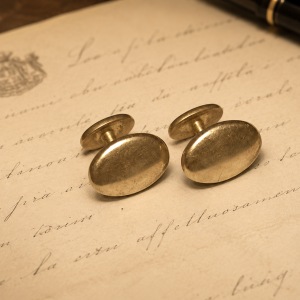
Silver, gold, darker metal tones, small stones, discreet engravings, geometric or classic shapes: anything that accompanies the outfit without dominating it.
These are cufflinks that do not seek immediate attention. They become a silent presence, a detail noticed only up close.
For a special occasion
Weddings, important dinners, ceremonies, formal events, anniversaries, elegant evenings.
In these cases, you can choose something with more presence: a stronger shape, a touch of colour, a particular workmanship, a more precious material, or a design with more personality.
The point is not to be flashy. The point is to give the cuff a memorable detail.
For a gift with a story
If you are buying cufflinks for someone else, do not start from your own taste. Start from the person.
Ask yourself:
“What truly says something about him?”
A hobby, a city, a colour, a profession, a memory, a character trait, a small contradiction. A very serious man who loves irony. A discreet professional who appreciates detail. A father who would never buy an accessory for himself, but would be pleased to receive one chosen with care.
The best cufflinks given as gifts are never just fashion accessories. They are small objects to wear, but also to remember.
2. Let style come from the person, not from the catalogue
Many beginners think that choosing cufflinks means mechanically matching them to a suit or a brand. In reality, it is closer to choosing a pair of glasses, a watch or an important pen: they should enhance the person, not disguise them.
If you are choosing for yourself, ask what kind of elegance feels natural to you.
If you are choosing for someone else, try to imagine what he would actually wear, not what you would like to impose on him.
Is he more classic or more experimental?
For a classic man, these often work well:
- sober metals such as silver, gold or rhodium;
- round, oval, rectangular or octagonal shapes;
- smooth, engraved or lightly worked surfaces;
- neutral colours;
- clean designs.
For a more creative or less conventional man, you can be bolder:
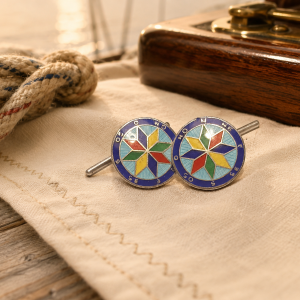
- coloured enamel;
- strong geometries;
- hard stones;
- unusual materials;
- figurative subjects;
- ironic details, as long as they are not childish.
The difference is subtle but important: an original cufflink should intrigue, not look like a joke.
Should they be seen or discovered?
Some cufflinks are made to be noticed. They have colour, shape, presence. They are small objects of art at the edge of the sleeve.
Others are more intimate. They are seen in a handshake, in a toast, in a gesture. They do not immediately attract attention, but they stay in the mind of those who look carefully.
Neither choice is better in absolute terms. It depends on the person.
For a gift, the safest choice is often somewhere in between: a pair elegant enough to feel special, but discreet enough to be genuinely worn.
Should they harmonise with other accessories?
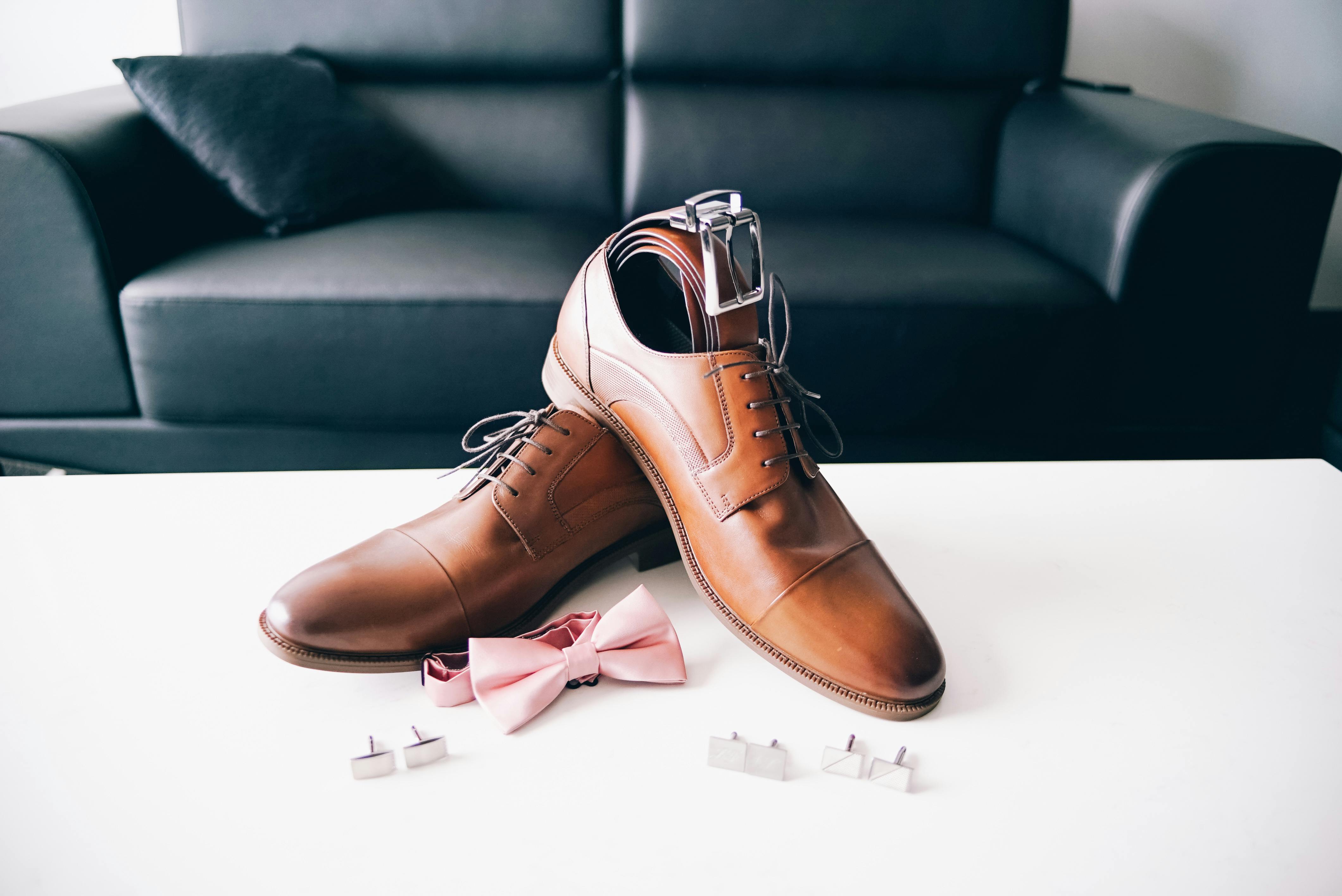
If the person already wears an important watch, a wedding band, a signet ring or a visible belt buckle, the cufflinks should not compete.
They do not need to match perfectly, but they should speak the same language.
Silver and steel work well together.
Gold, brown leather and warm tones create a more classic effect.
Black, onyx, dark enamel or burnished metals give a more formal and contemporary impression.
The goal is not perfect matching. It is balance.
3. Comfort is not a minor detail
Many people choose cufflinks by looking only at the front. Then they wear them for a full day and discover that they are too heavy, too rigid, too large or uncomfortable.
It is a common mistake.
A good cufflink must be beautiful, but it must also be wearable.
Check the mechanism
Cufflinks can have different types of closure: chain link, swivel bar, fixed back, double-sided, more technical or more decorative constructions.
For a beginner, the important thing is not to know every name. The important thing is to understand whether the mechanism looks solid, proportionate and easy to use.
A mechanism that is too short may tighten the cuff.
One that is too long or heavy may move too much.
A very delicate construction can be beautiful, but less suitable for everyday use.
Pay attention to weight
Very large or heavy cufflinks can be impressive, but they are not always ideal for someone wearing them for the first time.
For a first pair, especially if it is a gift, it is better to choose something balanced: present enough to feel special, but not so heavy that it becomes uncomfortable.
True luxury does not irritate. It accompanies.
The right shirt matters
Most cufflinks are designed for shirts with French cuffs, also known as double cuffs.
A normal button-cuff shirt is generally not suitable, except for particular models. If the person does not yet own shirts with double cuffs, it can be useful to give cufflinks for a precise occasion: a wedding, a ceremony, a formal dinner, or an event where wearing the right shirt makes sense.
A beautiful pair of cufflinks deserves the right cuff.
4. Three simple rules for beginners
To avoid making the choice too complicated, there are three useful rules to remember.
1. Start with a wearable pair, not the most spectacular one
The first pair of cufflinks should be easy to use.
It is better to choose a pair that is elegant, well proportioned, sober but not anonymous. Something that can work with a dark suit, a white or light blue shirt, a ceremony, a dinner or an important day.
The bolder piece can come later, once taste becomes more defined.
2. Choose the metal tone first, then the design
Before looking at shapes and details, ask yourself:
silver, gold, dark metal or mixed tones?
This decision makes everything easier.
If the person often wears steel or silver, a silver-toned pair will feel more natural.
If he likes warm tones, brown leather, gold or classic suits, a gold-toned pair may be more suitable.
If his style is minimal and contemporary, darker metals or clean geometries can work very well.
Only after that comes the design: smooth, engraved, enamelled, with stone, figurative, geometric or unusual.
3. When in doubt, choose the simpler option
When uncertain, choose the less flashy pair.
A simple cufflink is rarely wrong. It may look discreet, sober, classic. But it will hardly feel out of place.
A cufflink that is too showy, on the other hand, risks staying in the box.
This is even more true when buying a gift: it is better to choose an object that will be worn often than a spectacular piece that is difficult to use.
5. If you are buying a gift, think of the person
A successful gift does not only say:
“I bought something beautiful.”
It says:
“I thought of you.”
Cufflinks work very well as gifts because they are personal without being intrusive. They do not involve the difficulty of size. They are not too intimate. They are not ordinary. They can be elegant, symbolic, ironic, professional or sentimental.
They are especially suitable for:
- a father;
- a husband;
- a brother;
- a groom;
- a best man;
- a professional;
- a man who already has almost everything;
- someone who appreciates selected objects, not ordinary products.
The secret is not to choose only “beautiful cufflinks”.
The secret is to choose a pair that feels right for him.
6. Vintage cufflinks: why they can be a special gift
A pair of vintage cufflinks has something that a new object often does not: a previous life.
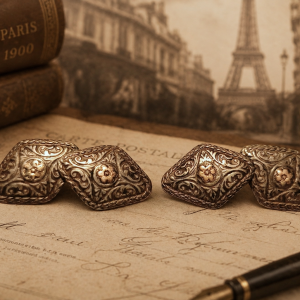
It may have a particular manufacture, a material that is no longer common, a shape linked to a period, a patina, a provenance, an unexpected detail.
This does not mean that every vintage object is automatically better. It means that, when chosen well, it can carry a rarer quality: character.
A vintage cufflink is not simply “new and perfect”. It has been selected, observed, preserved and brought back into circulation with a new possibility of being worn.
That is why it can become a very personal gift.
7. A quiet language
Cufflinks, for those wearing them for the first time and for those who have collected them for years, are a small silent language.
They can say:
“I care about details.”
“I chose with care.”
“This object has a story.”
“This moment matters.”
To choose your first pair, do not think like a buyer in a hurry. Think like a small curator of style, whether your own or someone else’s.
You are not choosing only an accessory.
You are choosing a personal object: to wear, to keep, perhaps to remember.
If you are at the beginning, start with a pair that is comfortable, honest and quietly meaningful.
Then one day, looking at it, you may say:
“This is where it began.”
FAQ
Are cufflinks a good gift?
Yes, cufflinks can be an excellent gift when they are chosen with the person who will receive them in mind. They work well because they are elegant, personal, unusual and do not require a size. The best cufflinks as gifts combine style, occasion and meaning.
What cufflinks should a beginner choose?
A beginner should start with a simple, well-proportioned and easy-to-wear pair. Silver, gold, neutral metals, classic or geometric shapes are often the safest choices. It is better, at least at the beginning, to avoid pieces that are too large or too eccentric.
Do you need a special shirt to wear cufflinks?
Yes. Most cufflinks are designed for shirts with French cuffs, also called double cuffs. Standard button-cuff shirts are generally not suitable for cufflinks.
Should cufflinks match a watch or ring?
They do not need to match perfectly, but they should harmonise. Silver-toned cufflinks work well with steel watches or silver-coloured accessories. Gold-toned cufflinks pair better with warm tones, gold, brown leather or classic suits.
Are simple or unusual cufflinks better?
It depends on the person and the occasion. For a first pair or for a gift, it is often better to choose simple cufflinks with character. More unusual models are perfect for someone who already has a defined style or enjoys original accessories.
Find a pair with a story
If you are choosing cufflinks as a gift, start with the person. Then let the right object follow.
In the selection of The Cufflinks Collector, you will find vintage pairs and one-of-a-kind pieces chosen for their character, condition, provenance and story.
Find a pair with a story.