Opening Statement
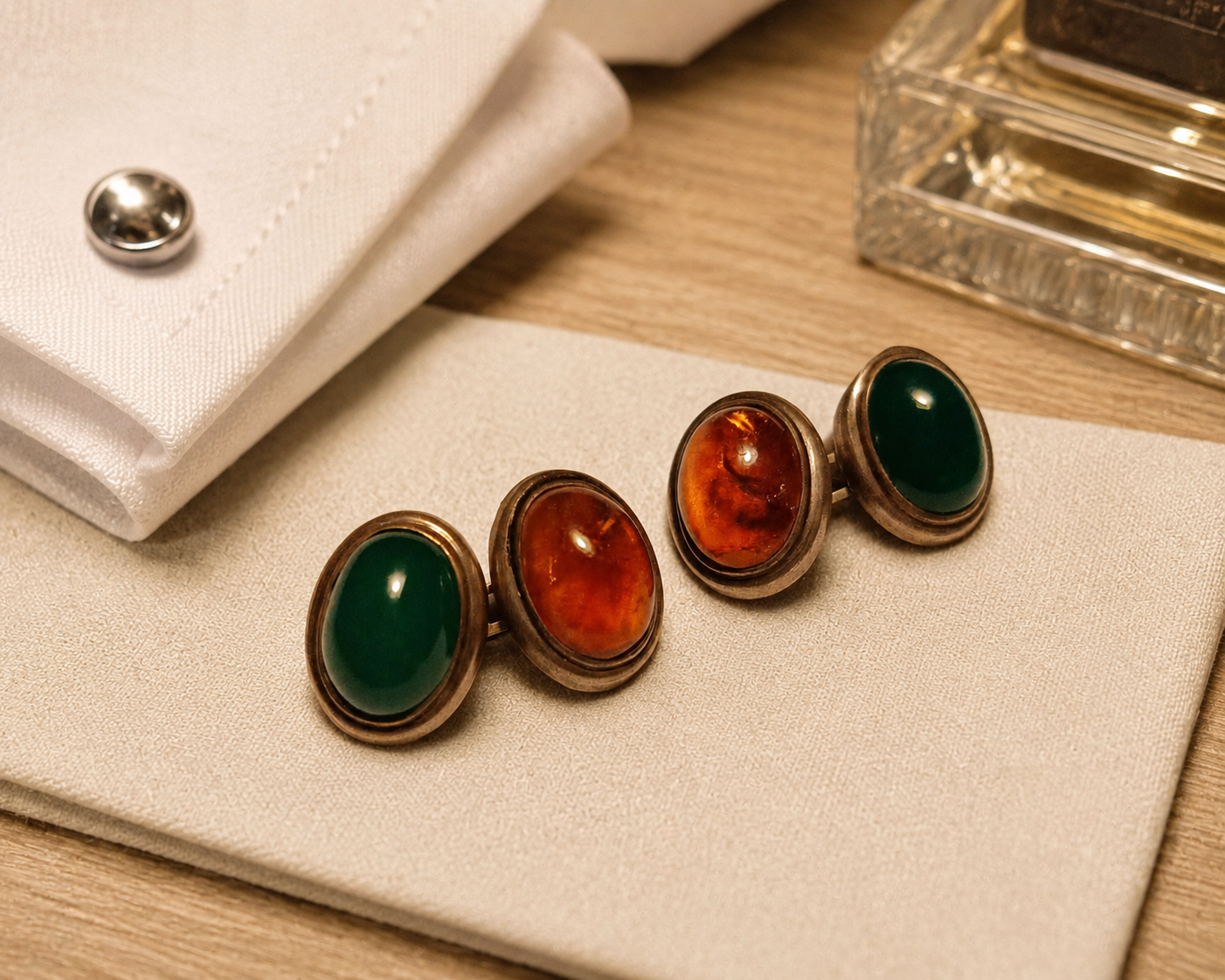
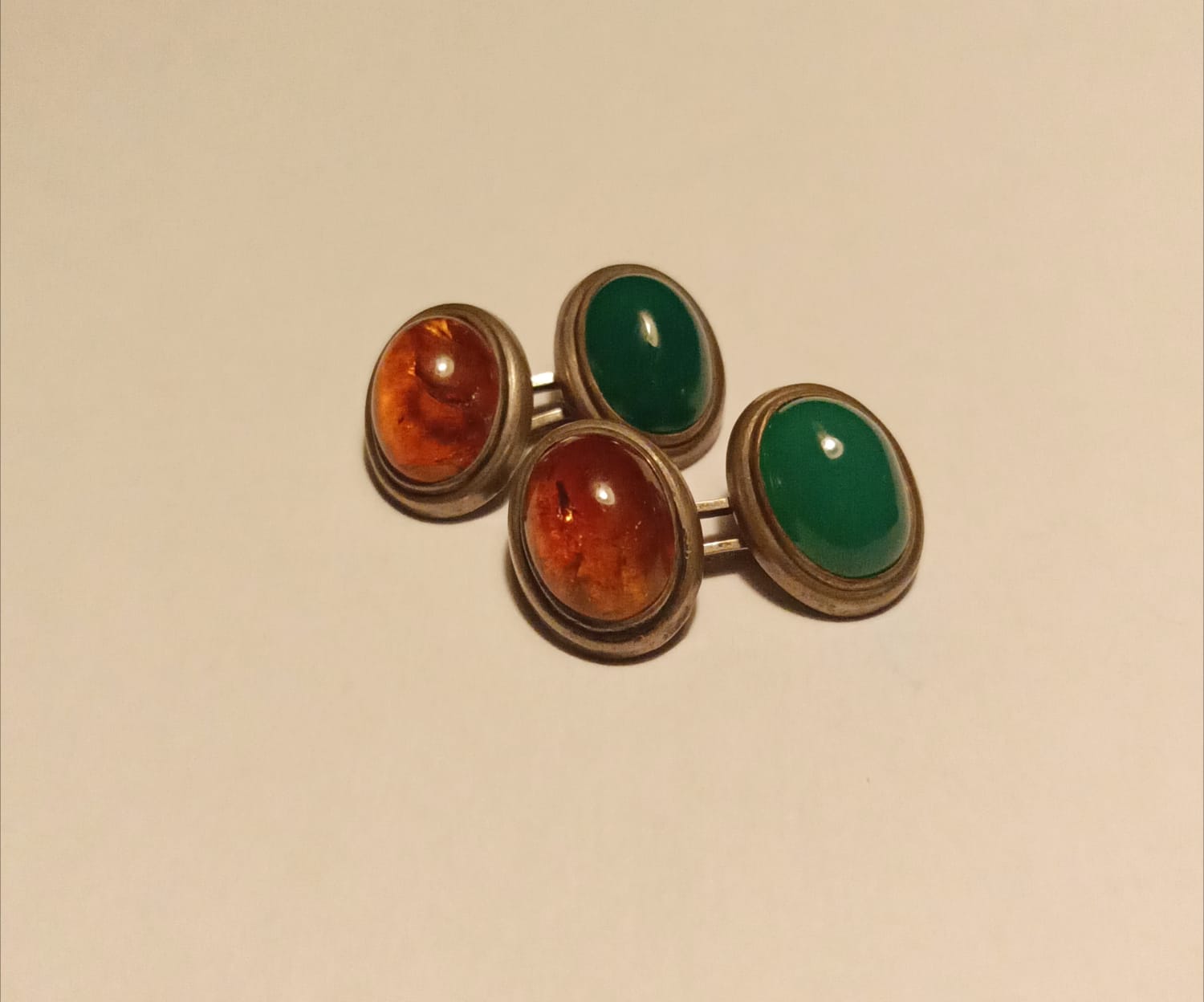
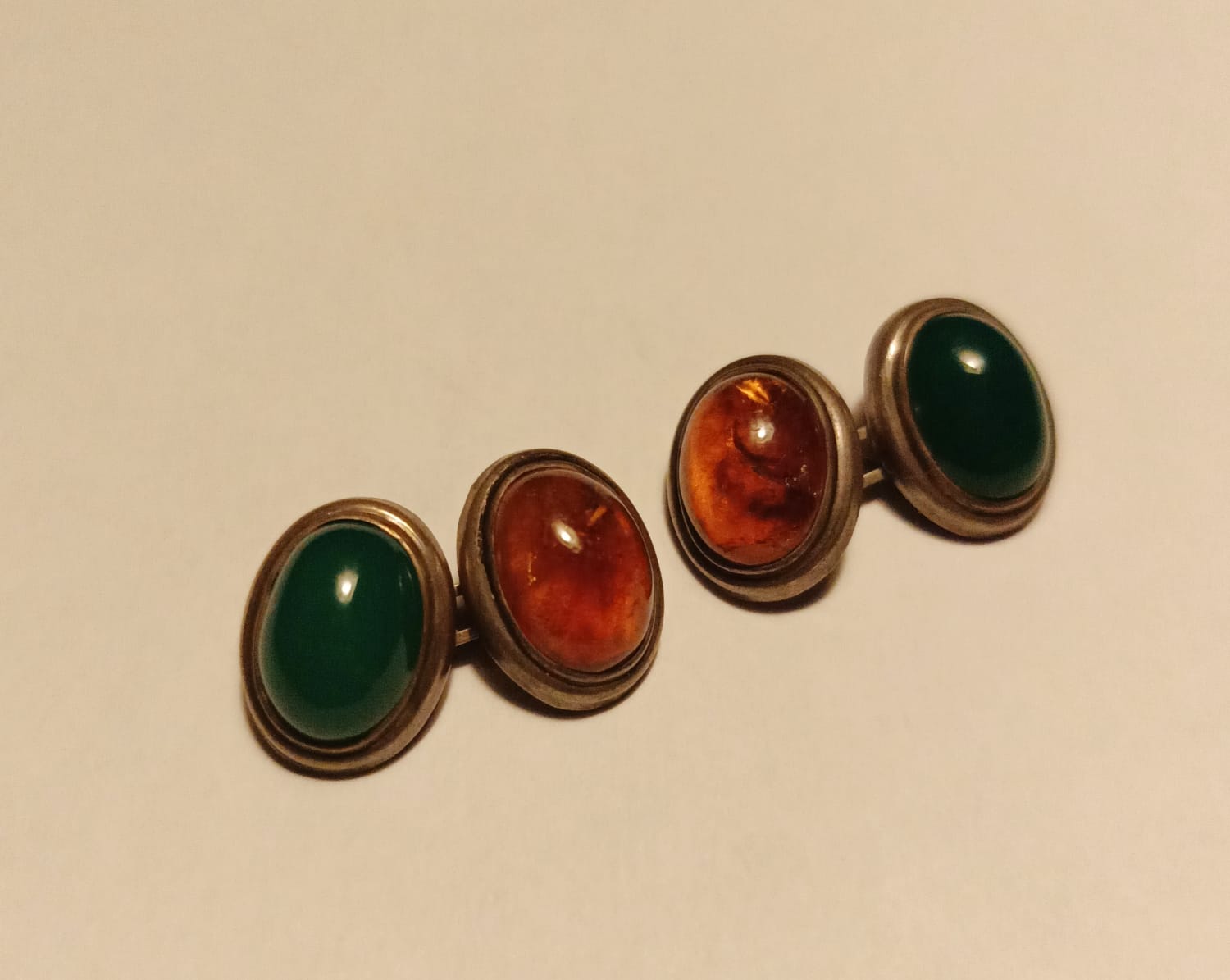
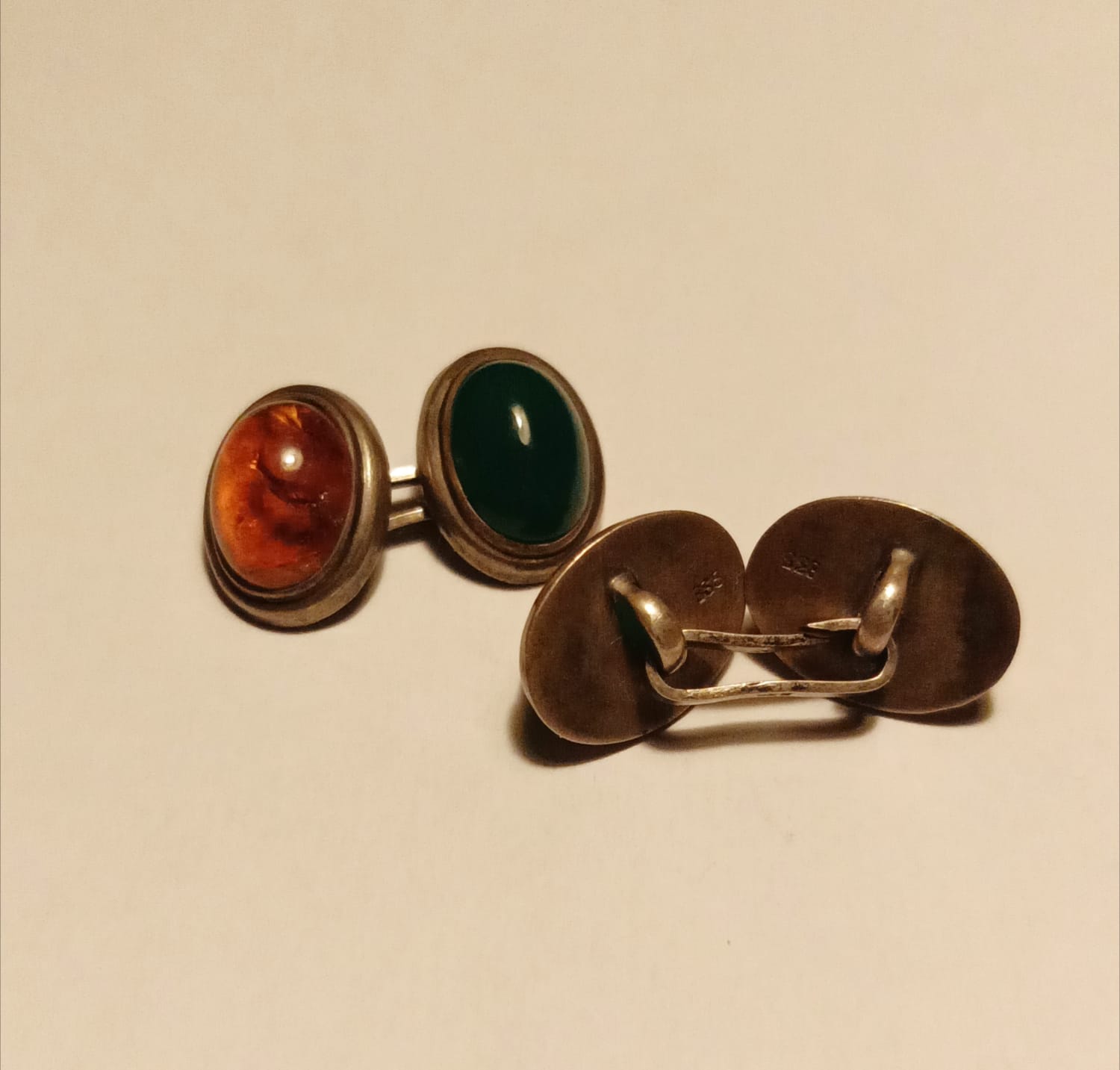
A refined double-sided pair of vintage 835 silver cufflinks with bottle-green and amber cabochons—true mid-century collectibles for the connoisseur.
The stepped, tiered rims give a pleasing architectural profile on the cuff, framing the stones cleanly without fuss. With chain-link construction, each cufflink presents a finished look from every angle—particularly handsome when your jacket sleeve shifts and the reverse face catches the light.
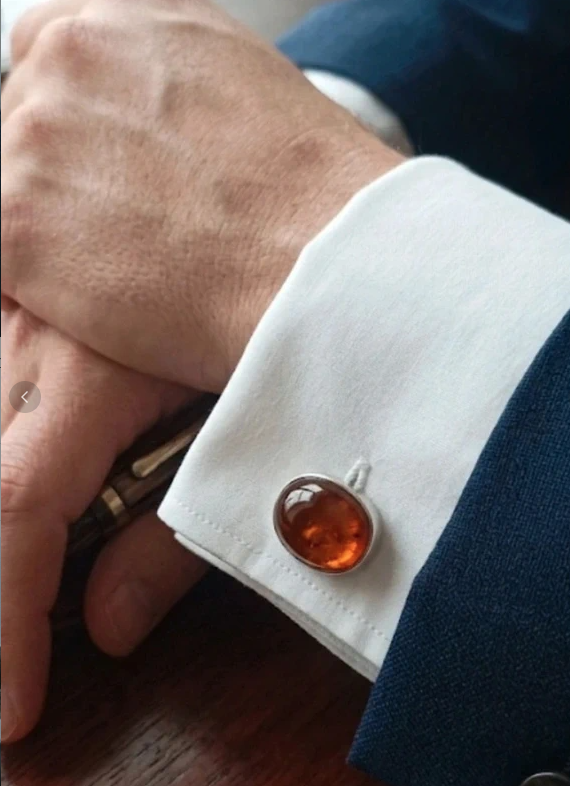
These wear beautifully with crisp white or pale-blue shirts; pair the green with charcoal or navy tailoring, and let the amber note warm up brown tweed or camel coats. For collectors, the appeal lies in the honest silver standard and the elegant practicality of a true double-sided design, a format long appreciated for its refined “all-round” finish.
These double-sided cufflinks carry added value because both faces are fully finished and set as display fronts—effectively giving you the presence of two premium pairs in one.
The Collector’s Note
There’s a kind of quiet joy in finding cufflinks like these—thoughtful on both sides, balanced without pretence. The silver has that gentle, lived-in warmth that only time can give, and the cabochons sit just proud enough to be noticed, without ever getting in the way. I like them best with a soft shirt and a jacket that has texture and soul—flannel, hopsack, tweed. Let the colours speak softly. The craftsmanship doesn’t try to impress—it simply belongs.
If I were to suggest something, I’d say these make a lovely gift. For someone with quiet confidence, or even for yourself—because there’s pleasure in choosing well. The double-sided design isn’t for show-offs. It’s for those who notice things. Those who appreciate care in the making and softness in the presence. You don’t wear these to stand out. You wear them because they feel like yours from the start.
Perhaps I should not say this, because every pair of cufflinks has its own beauty, but this type of cufflink is among my personal favourites. I have always been fascinated by the cabochon form. It feels wonderfully retro, yet extremely refined: soft in shape, elegant in presence, slightly nostalgic, and never excessive.
They are the kind of cufflinks I could easily imagine on Humphrey Bogart’s wrist: full of personality, confident, decisive, but never intrusive. A small detail with character — masculine, understated, and unmistakably vintage. For me, that is exactly their charm. They do not need to shout. They simply belong to a certain idea of elegance: sharp, quiet, a little cinematic, and beautifully old-fashioned.
Historical Note
Cufflinks set with green and orange cabochons sit very comfortably within mid-20th-century taste, when men’s accessories often borrowed colour and surface play from jewellery—without becoming overtly decorative.
Pieces of this kind were widely made across continental Europe (Germany?), with workshops in places producing smart dress cufflinks in small runs for local jewellers and menswear retailers.
The work typically involved a bench jeweller (goldsmith/silversmith) to form and finish the mounts, and—where the settings are properly finished—a stone-setter to seat the cabochons securely. The cabochons themselves are often glass rather than hardstone on pieces like this, frequently sourced through European supply chains (rather than cut in-house), then set and polished as part of the final assembly.
Details at a Glance
Essential information for collectors, kept clear and immediately readable.
|
Materials / Stones |
|
|---|---|
|
Style |
Double-sided, oval cabochon design with stepped silver rims; quietly graphic colour contrast. |
|
Occasion |
Business suiting, dinners, weddings, cocktail events; ideal when you want a restrained pop of colour. |
|
Mechanism / Closure |
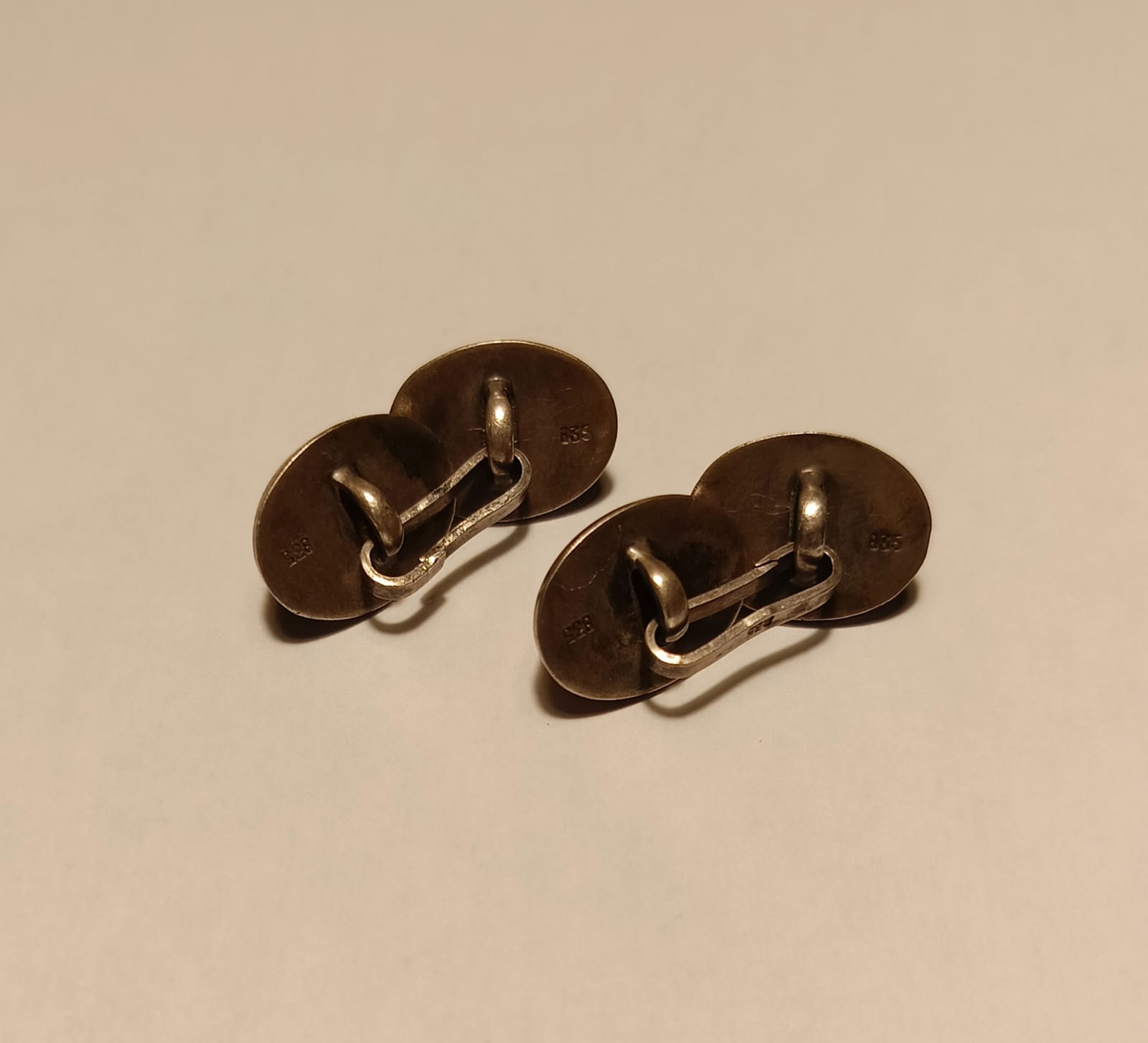
Chain-link / fixed-link style cufflinks (two decorative faces per cufflink). |
|
Hallmarks / Maker’s Marks |
“835” stamped on the reverse oval plates (visible on multiple backs). |
|
Dimensions mm |
Face: 16×14 |
|
Weight |
17.59 g |
|
Period / Era |
Mid-20th century (mid-century). |
|
Origin / Region |
Western Europe (common “835” silver standard). |
|
Condition |
Very Good—light surface wear and a gentle, even patina to the metal; stones appear glossy with no obvious chips visible in the photos. |