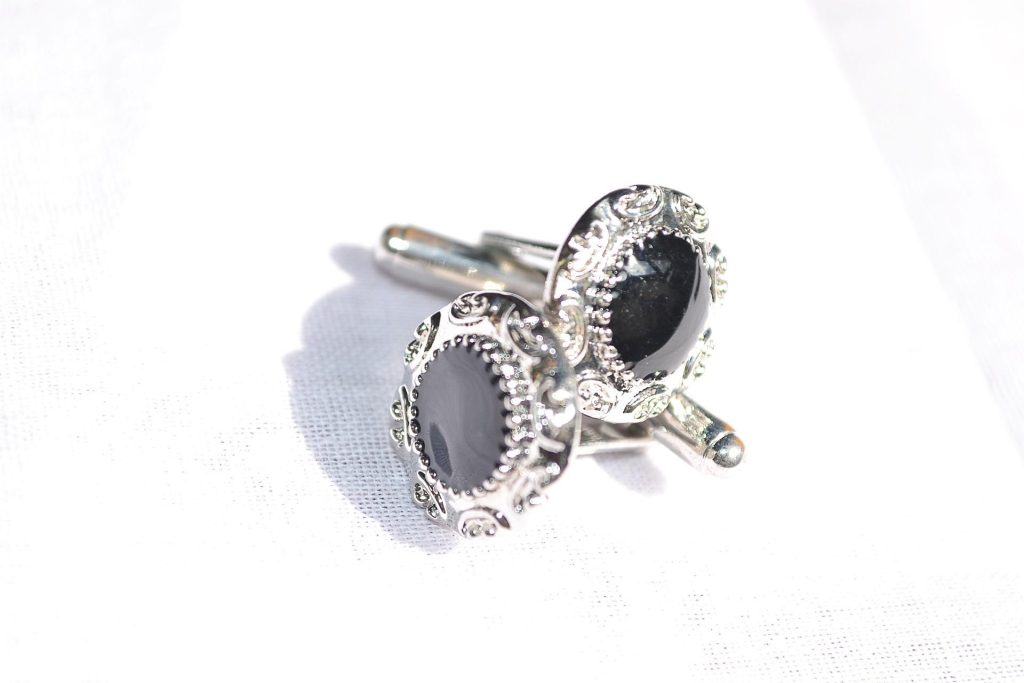
Understanding Cufflinks
Cufflinks — A Gentle Primer from the Old School
There’s a particular calm in fastening a cufflink. It’s unhurried, deliberate—like tying a tie by hand. The right pair doesn’t merely close a cuff; it frames your gestures and says, softly, “someone cared about the details.”
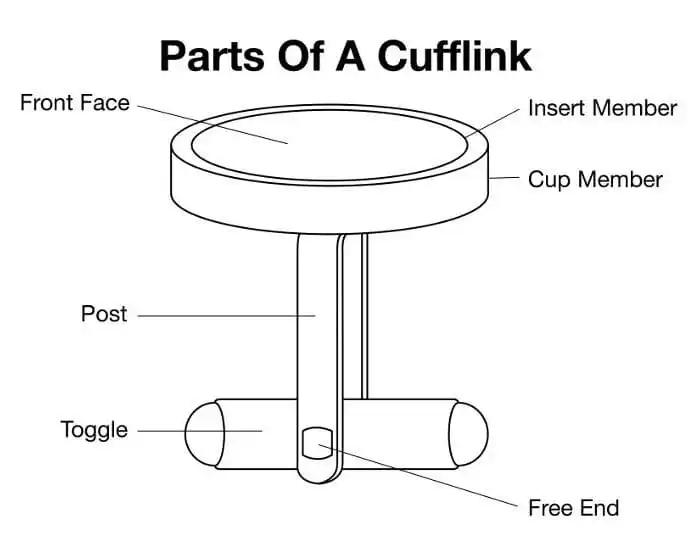
The Anatomy (plain words, no fuss)
- Face – The part the room sees. Metal, enamel, glass, stone—even tiny works of art. Keep it honest to your style and it will never age.
- Mount – The setting that holds the face. A good mount feels sturdy in the fingers.
- Post/Link – The bridge that travels through the buttonholes.
- Back – The mechanism that secures it all. Choose this first; comfort follows.
The Backings (what wise wrists prefer)
- Whale back – Flat head, straight post, flip-over “tail.” Quick, tidy, dependable. A favorite for everyday suits because it behaves.
- Bullet back – A little barrel swivels inside a frame; turn it perpendicular to lock. The swivel-toggle rose to prominence in the early 20th century and remains the modern standard—efficient without shouting.
- Fixed post / stud – No moving parts. You guide a small fixed disc through the hole and straighten the cuff. Minimal bulk, maximum durability.
- Chain link – Two faces joined by a short chain. A touch looser on the wrist and unmistakably classic—think vintage eveningwear.
- Silk knot – Two fabric knots on an elastic cord. Cheerful, practical, and historically sound: Paris shirtmaker Charvet popularized them in the early 1900s, and they’ve been brightening cuffs ever since.
Old-timer’s note: Stiff, starched cuffs in the 19th century made buttons awkward; links slid through neatly. Form met function, and elegance followed.
When to Wear (and when to enjoy)
If your shirt has buttonholes with no buttons—single or French (double) cuffs—that’s the cue. Business days, weddings, cocktails, black tie. And yes, mixing high and low works: a neat chambray with convertible cuffs and understated links looks modern without trying.
French cuffs fold back and present a little stage for the face of the link. They traveled from France to Britain and into evening dress; they still feel right when the lights go low.
Buying Wisdom (the short list you’ll actually use)
- Back first, then face. A whale or bullet back is the easiest daily companion; once that’s settled, pick a face that plays well with your watch and cuff buttons.
- Mind the scale. Slim cuffs prefer smaller faces; heavier French cuffs can carry bolder shapes or textures.
- Prefer honest materials. Sterling marks like 925 (or continental 835), clear maker’s stamps, real stones (or well-made glass) age beautifully—and hold value.
- Pairs that tell a story. Regional signatures—Baltic amber on German 835 silver from Fischland, for example—add provenance and charm you can point to, not merely allude to.
Care That Pays You Back
- Wipe after wear with a soft cloth; keep silver dry and let a little patina live—character beats over-polish.
- Store pairs together, faces up. A small pouch prevents desk-drawer heroics at the last minute.
Glossary in a Glance
- French (double) cuff – A long cuff folded back and fastened with links; standard for evening dress.
- Whale back / bullet back – Modern, easy closures; the latter uses a swiveling “bullet” inside a frame.
- Silk knot – Fabric link, widely popular since early-1900s Paris; colorful and dependable.
- Hallmark – Metal fineness stamp (e.g., 925, 835); often joined by a maker’s mark.
Final word from the old school:
Think of cufflinks as you would a good handshake—firm but gracious, felt more than displayed. Choose pieces with quiet integrity and real details, and they’ll reward you every time you turn a wrist.